
Johnson County Arrest Records and Court Charges
Arrest records and court charge records answer different questions. The arrest record is created on the law-enforcement side. It may identify the person arrested, booking agency, booking date, offense code, bond type, bond amount, and custody status. In Johnson County, jail roster fields come from the HomeWAV resident list and related jail channels, not from a court docket. That list does not provide the full narrative charge or the full case outcome.
The court charge record begins when the Johnson County Prosecutor files formal charges with the court. That filing starts or updates the criminal case record in the Johnson Circuit Court, Johnson Superior Courts, Greenwood City Court, or Franklin City Court, depending on the offense and venue. Charges after arrest should be checked in MyCase because the court record shows how each charge moves through hearings, amendments, dismissal, plea, trial, disposition, and sentencing. The full outcome belongs in Johnson County criminal court records.
Find Johnson County Arrest Records and Charges
Start with the record type. If the question is whether a person is in custody, check the jail roster or statewide jail tools. If the question is what formal charge was filed, search MyCase by defendant name or case number and narrow to Johnson County when possible. If the question is a police incident report or crash report, the sheriff's Records Division is the law-enforcement records path rather than the court file.
- Use jail roster data for custody, booking agency, booking date, offense code, and bond fields.
- Open MyCase for filed charges, case number, hearing dates, and court events.
- Search by defendant name, case number, citation number, court, county, attorney, or date range.
- Read each charge separately because one arrest can lead to multiple counts with different statuses.
- Request official court copies from the Clerk of the Courts when a document is not linked online.
Statewide tools can also matter. INjail, IDOC, and SAVIN help with custody or notification questions, while MyCase handles public filed-charge and case events. A person held on a warrant, out-of-county hold, or state-prison matter may appear in a custody system before a Johnson County court charge record gives the complete local case posture.
Charges After Arrest in Johnson County
The prosecutor, not the jail roster, controls the formal charge filing. Indiana uses prosecuting attorneys. The official IPAC profile names Lance D. Hamner as Johnson County Prosecutor, with the office at 1 Caisson Drive in Franklin and phone (317) 346-4525. Once the prosecutor files a charge, MyCase can show the case number, court, charge entries, hearings, disposition, and sentence when public.
| Document | Filed By | Common Use | Record Effect |
|---|---|---|---|
| Complaint | Law enforcement or prosecutor | Often tied to initial accusation or lower-level filing practice | Can start or support a criminal case record. |
| Information | Prosecutor | Common formal charging document in Indiana criminal cases | Lists the charge or charges filed in court. |
| Indictment | Grand jury | Used when a grand jury returns charges | Creates formal charges through the court case. |
The charge document matters because an arrest may be based on one alleged offense while the court case later shows different filed charges. The prosecutor can file fewer charges, more charges, amended charges, or no charge. Court users should read the current charge status and final disposition rather than rely only on booking or arrest labels.
Booking Fields in Johnson County Arrest Records
The HomeWAV Johnson County Jail resident list exposes structured booking fields. It can show last name, first name, identifier, location, date of birth in the source format, booking type, agency, booking date, release date, offense type, bond type, and bond amount. It does not show a full charge narrative, court date, warrant number, or complete case outcome in the table.
| Booking Field | What It Can Show |
|---|---|
| Name and identifier | The jail name fields and person identifier. |
| Location | Housing or custody location, including out-to-other-agency notes when shown. |
| Booking type | Codes such as warrant, arrest, IDOC, or other internal categories. |
| Agency | Agency codes such as sheriff, city police, state police, or other booking agency. |
| Booking and release date | When the person entered custody and, if shown, when the person was released. |
| Offense type | Code-style offense information, not a full narrative charge. |
| Bond type and amount | Release-related fields when listed by the jail table. |
Johnson County Charge Status Terms
Charge status can change many times. A Johnson County court charge may begin as pending, then be amended, reduced, dismissed, or resolved by plea or trial. Some counts may be dismissed while others result in conviction. A docket may also show bond review, warrant, failure-to-appear, probation, or sentencing entries tied to the charge or case.
| Status | What It Means |
|---|---|
| Pending | The filed charge remains active and has not reached final disposition. |
| Amended | The prosecutor or court record changed the charge, count, wording, or level. |
| Reduced | The filed count changed to a lower offense level or lesser charge. |
| Dismissed | The charge was ended by court action and did not result in conviction on that count. |
| Nolle prosequi | The prosecutor declines to proceed on a charge, often shown as a dismissal-style event. |
| Disposed | The court has recorded an outcome for the charge or case. |
Charge vs Conviction
A charge after arrest is not the same as a conviction. The charge is an accusation filed with the court. A conviction is a final guilty result after a plea, verdict, or finding. Johnson County records can show both, but the distinction must be preserved because a case may include dismissed counts, amended counts, reduced counts, or acquittals.
| Point | Charge | Conviction |
|---|---|---|
| Meaning | Formal accusation in court. | Final guilty outcome. |
| Timing | Appears after arrest or investigation when filed. | Appears after disposition and judgment. |
| Can change | May be amended, reduced, dropped, or dismissed. | May be appealed, corrected, sealed, or expunged if eligible. |
| Where to verify | Charge list and CCS entries. | Disposition, judgment, and sentencing entries. |
Sheriff Records and Court Charges
Law-enforcement records are not the same as court charge records. The Johnson County Sheriff's Records Division handles public information requests for sheriff reports and crash reports. The research source says incident reports are free up to four pages, then 10 cents per page, and crash reports cost $8. Reports are usually available about 24 hours after the incident or accident. A written request should include the report number if available, date, location, and names.
The sheriff's public records page points crash reports to BuyCrash for online crash-report access.
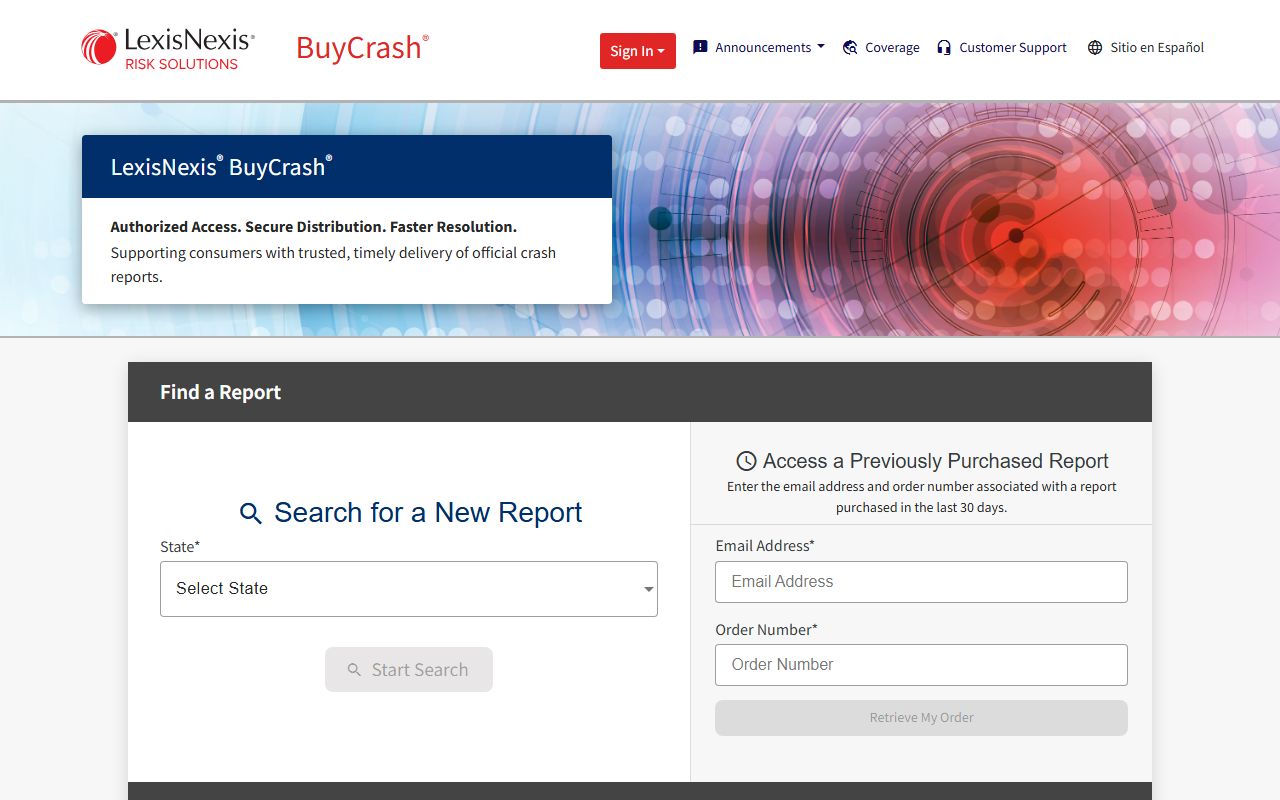
Crash reports and incident reports can explain the law-enforcement event, but filed court charges must still be checked in the court case record.
Bonds, Warrants, and First Hearings
Arrest records may show bond type or bond amount, but the court record explains what happens after release or continued custody. Johnson County local rules include a bail schedule unless bail is endorsed in a warrant or ordered by the Circuit, Superior, or City Courts. A judicial officer may review bond on written request by either party. Cash bail is held by the clerk in trust and may apply toward fines, costs, indigent services, restitution, judgments, or fees.
Booking type can also signal a warrant arrest, but warrant status should be checked through MyCase, the issuing court, and custody channels. The sheriff FAQ says the sheriff cannot advise on pending court dates, hearings, or cases. For county court questions, use the court switchboard. For Greenwood City Court and Franklin City Court matters, use those city courts.
Sealed vs Expunged Arrest Records
Indiana sealing and expungement law is critical for arrest records and court charges. MyCase help says public cases are searchable only when they are not confidential, sealed, or expunged. Under IC 35-38-9, the petition route depends on whether the record is an arrest or charge that did not result in conviction, or a conviction record with different waiting periods and eligibility rules.
| Point | Sealed | Expunged |
|---|---|---|
| Public search | Hidden or restricted from ordinary public access. | Restricted after an eligible petition and order. |
| Applies to | Cases or fields excluded by law, rule, or court order. | Eligible arrests, charges, or convictions under IC 35-38-9. |
| Johnson County filing | Handled through the relevant Johnson County court when the local case is involved. | Filed in the county where charges were filed or, if none, where the arrest occurred. |
Some collateral public records use separate systems. The Indiana DOC sex and violent offender registry source explains restricted and collateral registry context.
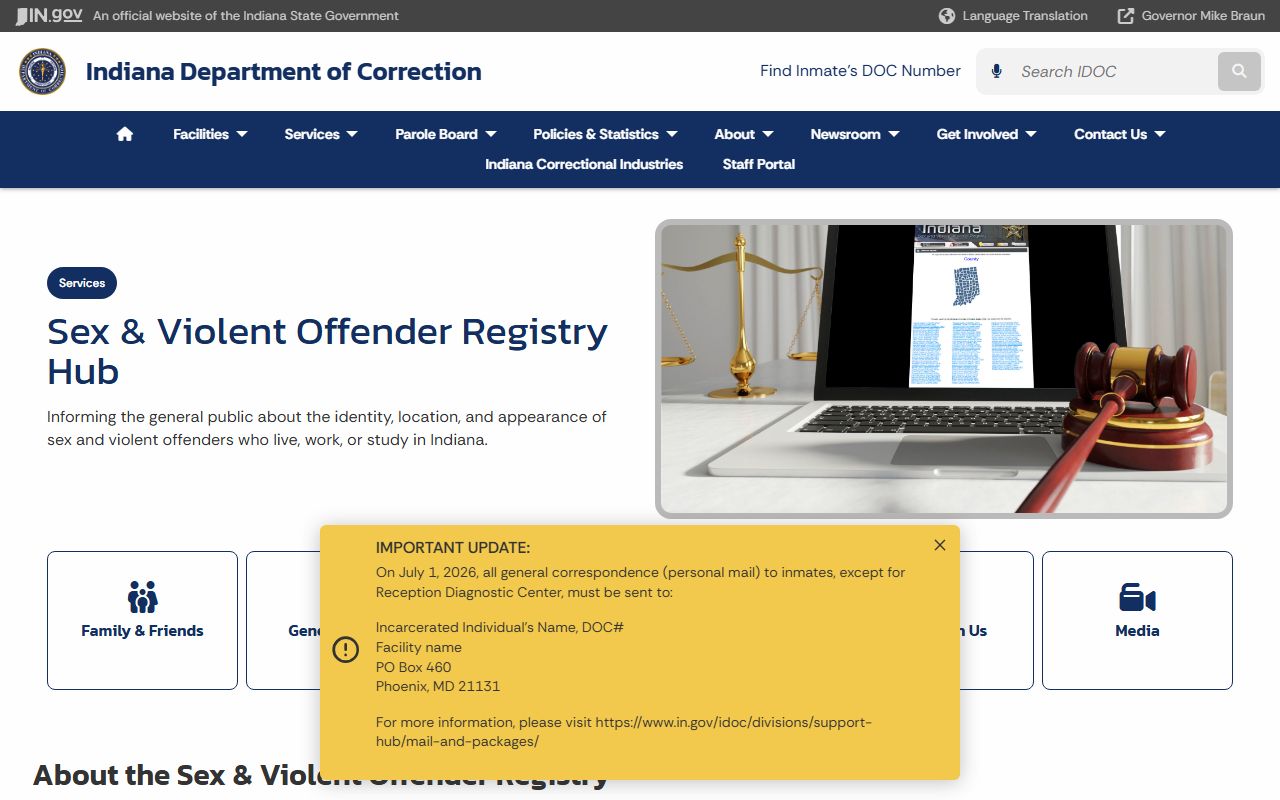
Registry information should not be confused with a new arrest record or a pending court charge; it is maintained under separate legal rules.
Restricted Johnson County Charge Records
Restricted charge records include juvenile matters, sealed or expunged cases, adoption-related material, mental-health records, protected-person details, and sensitive identifiers. Protection-order cases are not found in MyCase because protected-person information is excluded from online public access. Juvenile court and law-enforcement records are confidential except as Indiana statute provides, so juvenile arrest and charge information should not be treated like adult case information.
For a practical search, separate the question into three tracks. Custody and booking questions route to jail or statewide custody tools. Filed charges and charge status route to MyCase and the court that has the case. Incident reports, crash reports, and public law-enforcement reports route to the sheriff's Records Division. Keeping those tracks separate prevents a jail code from being mistaken for a conviction, or a court charge from being mistaken for the whole arrest report.